

Blacktown is one of the largest local government areas in New South Wales, with close to 400,000 residents at the 2021 Census and new suburbs still filling out in the north-west. It is also one of the busiest NDIS markets in Western Sydney.
That combination attracts two kinds of founders. Disability support providers who want to register, grow, or open SIL houses. And business owners in other sectors who need a plan solid enough to put in front of an investor or bank.
BPlanWriter operates from Flushcombe Road, Blacktown, so this market is home ground for us. This guide explains what an NDIS business plan and an investor-ready business plan need to include for a Blacktown business in 2026, and how to build financial projections that hold up.
Why Blacktown Is a Distinct Market
Demand Drivers
- Population growth: Greenfield suburbs such as Marsden Park, Schofields, and Riverstone continue to add young families.
- Established suburbs: Mount Druitt, Rooty Hill, Doonside, Seven Hills, and Blacktown itself carry older housing and a large existing participant base.
- Cultural diversity: Languages such as Punjabi, Tagalog, Hindi, and Arabic are widely spoken at home. Culturally matched support workers are a real competitive advantage.
- Health infrastructure: Blacktown and Mount Druitt hospitals generate discharge referrals for disability and allied health supports.
Local Constraints
- Workforce competition: Support workers are in high demand across Western Sydney. Turnover and recruitment lead times must sit in your plan.
- Housing costs: SIL and SDA models depend on property availability and rent levels.
- Travel time: Large service areas mean non-billable travel. Rostering by suburb cluster matters.
Local Market Factor Matrix
| Factor | Blacktown Reality | Business Plan Response |
| Participant demand | Large and growing participant base | Show referral pipeline by suburb |
| Workforce supply | Tight, high turnover | Budget recruitment costs and retention incentives |
| Language needs | High share of non-English households | Plan bilingual staff and translated materials |
| Property market | Rising rents, new housing in growth suburbs | Model SIL property costs with sensitivity |
| Transport | Car-dependent outer suburbs | Include vehicle allowances and travel time |
| Competition | Many small providers | Position on niche, quality, or culture |
NDIS Business Plan Requirements for Blacktown Providers
2026 Regulatory Baseline
Every Blacktown NDIS plan written today must reflect:
- Mandatory registration for new SIL providers and NDIS digital platforms from 1 July 2026
- Existing unregistered SIL providers required to apply by 1 October 2026
- Mandatory registration for all high-risk supports planned from 1 July 2027
- Notification to the NDIS Commission when a provider business is being sold
- Pricing Schedule 2026-27 effective 1 July 2026
- Award wage increase of 4.75% from 1 July 2026
For a full walkthrough of registration and plan sections, see our guide to the NDIS provider business plan service.
Core Sections Auditors and Funders Expect
- Executive summary with registration status and growth target
- Services mapped to registration groups
- Local market analysis for Blacktown and surrounding LGAs
- Governance, risk, and incident management aligned to the Practice Standards
- Workforce plan with award classifications
- Referral and marketing plan
- Five-year financial projections
- Risk register and exit or succession plan
What Makes an NDIS Plan “Investor-Ready”
An auditor checks compliance. An investor checks returns and risk. If you plan to raise capital, buy a provider, or sell one later, the plan needs both.
| Investor Question | What Your Plan Must Show |
| How does the business make money? | Revenue by support type and funding source |
| Is the revenue reliable? | Participant retention, plan review risk, service agreements |
| Is the margin sustainable? | Price limit vs award cost trend |
| Is it compliant? | Registration status, audit history, incident trends |
| Can it scale? | Rostering systems, management depth, recruitment pipeline |
| What is the exit? | Sale process including Commission notification |
Investors have become wary of buying “cleanskin” registered entities with no real operations. The 2026 rule changes target exactly that. A plan that shows real participants, real staff, and real systems carries more value.
Our guide to common reasons investors reject business plans covers the red flags.
Financial Projections for a Blacktown NDIS Provider
Revenue Assumptions
Start with the 2026-27 price limits, then discount for reality.
| Assumption | Illustrative Value | Why It Matters |
| Weekday daytime support price limit | $73.58/hr | Maximum, not guaranteed |
| Average realised rate (mix of times) | $78.00/hr | Evenings and weekends lift the average |
| Billable utilisation | 80% | Travel, training, and gaps reduce billable time |
| Cancellations | 3% of booked hours | Short-notice rules apply |
| Participant growth | 4 to 6 net new per month in year one | Depends on referral network |
Five-Year Projection Summary (Illustrative)
A Blacktown provider offering core supports and community participation, starting with 12 workers:
| Metric | Year 1 | Year 2 | Year 3 | Year 4 | Year 5 |
| Active participants | 35 | 60 | 85 | 105 | 120 |
| Support workers (FTE) | 12 | 20 | 28 | 34 | 38 |
| Revenue (AUD) | $1.45M | $2.55M | $3.60M | $4.40M | $5.00M |
| Wage costs (incl. on-costs) | $1.05M | $1.82M | $2.55M | $3.10M | $3.50M |
| Overheads | $0.30M | $0.42M | $0.55M | $0.65M | $0.73M |
| EBITDA | $0.10M | $0.31M | $0.50M | $0.65M | $0.77M |
| EBITDA margin | 7% | 12% | 14% | 15% | 15% |
These figures show structure, not a promise. Your numbers depend on support mix, rostering efficiency, and wage classifications.
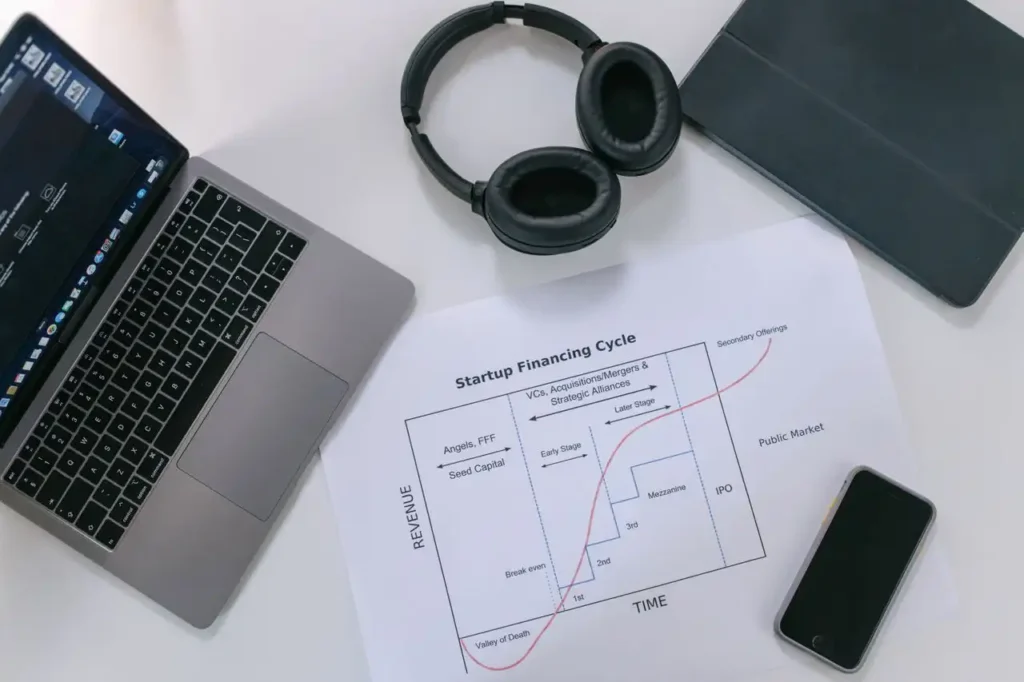
Sensitivity Analysis Investors Expect
| Scenario | Assumption Change | Year 3 EBITDA Margin |
| Base case | As above | 14% |
| Price freeze | Price limits flat for two years, wages +3.5% a year | 9% |
| Turnover shock | Staff turnover rises, recruitment costs double | 11% |
| Referral slowdown | Participant growth 30% lower | 10% |
| Upside | Utilisation reaches 85% | 17% |
Here is the catch: Many NDIS plans show margin growth by assuming price limits rise faster than wages. In 2026-27, core support prices roughly matched the award increase, and several therapy prices were held. Build your base case on parity, not on a gap opening in your favour.
Cash Flow Notes for Lenders
- Payment timing differs between NDIA-managed, plan-managed, and self-managed participants
- The government is funding a new payment system requiring providers to enrol with the NDIA before receiving payments
- Fortnightly payroll runs ahead of claims, so budget working capital for at least two months of wages
- NSW payroll tax applies once total wages pass the state threshold, which many growing providers reach by year two or three
Investor-Ready Plans for Non-NDIS Blacktown Businesses
The same discipline applies to any Blacktown founder raising money. Trades, logistics near the M7, food businesses, childcare, and healthcare clinics all benefit from a plan that answers investor questions directly.
Investor Plan Essentials
- Clear problem and market size for Western Sydney
- Unit economics per customer, job, or site
- Five-year projections with assumptions page
- Use of funds and milestones tied to each tranche
- Management team and gaps
- Exit pathways
| Plan Type | Best For | Typical Length |
| NDIS provider plan | Registration, audit support, bank finance | 25 to 35 pages |
| Investor business plan | Equity raise, partner buy-in, acquisition | 25 to 40 pages |
| Pitch deck | First investor meetings | 10 to 15 slides |
Not sure which you need? Read investor business plan vs pitch deck. When you get the meeting, follow our tips on presenting your business plan to investors.
Blacktown Provider Readiness Checklist
- Registration status confirmed for every support you deliver or plan to deliver
- July 2027 high-risk support expansion addressed
- Price limits updated to 2026-27
- Wages updated for the 4.75% award increase and 12% super
- Utilisation and travel assumptions realistic for your service area
- Bilingual workforce and referral partners identified
- Five-year projections with at least three sensitivity cases
- Sale notification and exit strategy addressed if investors are involved
Frequently Asked Questions
Do Blacktown NDIS providers need a different plan from other areas?
The rules are national. The market is local. Your demand data, workforce costs, travel times, and cultural needs should reflect Blacktown and surrounding Western Sydney suburbs.
What makes an NDIS business plan investor-ready?
Clear revenue by support type, realistic margins under current price limits and award wages, compliance evidence, a scalable workforce plan, and sensitivity analysis.
How many years of projections should an NDIS investor plan include?
Five years is standard for investors. Banks often accept three, with year one monthly.
Can BPlanWriter meet in person in Blacktown?
Yes. Our Australian office is on Flushcombe Road, Blacktown NSW 2148, and we also work online across Australia.
Work With a Blacktown Business Plan Writer
A Blacktown NDIS plan needs to satisfy auditors, convince funders, and run the business. Getting the numbers right under 2026-27 pricing and award rates is where most plans fall short.
BPlanWriter prepares investor business plans and NDIS plans for providers across Western Sydney. View a sample investor business plan, add a pitch deck for first meetings, learn more about our team, or contact our Blacktown office.
This article is general information. Projections are illustrative. Check current NDIS Commission, NDIA, and Fair Work guidance before you rely on any figure.
